The Single Frame
The slide of an 8x10 film holder into the back of a Deardorff view camera produces a distinct silence. It is not the quiet of an empty room. It is the quiet of absolute finality.
The Architecture of Sight: Focal Length as Intent
Tools do not just execute work; they dictate thought. The choice between a 35mm equivalent field of view and a 50mm standard view is not a technical calculation of glass and megapixels. It is a psychological switch.
Let It Be a Mystery
Trying to think about my photography kit. I have so much gear that I can’t begin to use it all, and I’ve had to reexamine what, why, and how I photograph. Free time, funding, location, and material costs are all things that have changed and that I’ve had to navigate.
Street Primes
The 28mm and 50mm make a formidable two-lens combination, but the 35mm remains the ultimate single choice. Unlike the geometric abstraction of the others, a 35mm puts you in direct dialogue with the material reality of the scene.
Falling Short
I want to convey that quiet alienation — the stillness and loss of not fitting what the world demands. The point isn’t self-help but to help somebody else. I can’t fix the world or be everything everyone needs, but if I can help one person right now, that’s something.
Autonomous Objects
I set out to take pictures of what it was like, but my pictures look nothing like what it was like to be there. Instead, all I have are these images that exist as their own thing—and in that sense, they’re kind of nice, too. I took a break from photography for too long. I thought I was done, but then I realized I was just getting started.
The Intermediate: RC Paper as a Practical Bridge
There is a persistent idea in traditional photography that if a darkroom print isn’t washed on heavy fiber-based paper for an hour and flattened under a heat press, it doesn’t count. Resin-coated (RC) paper is often treated as a temporary step—something you use for quick contact sheets or working proofs before making the “real” print. But that view misses a far more practical way to work.
The Open Air
We do not need high-ceilinged galleries to justify the work. We do not need permission from curators, nor do we need a complex vocabulary to explain what is already standing in front of us.
Without Friction
Someday I’ll age—it isn’t guaranteed, but it is likely. I hope to approach it with a realistic, adaptable mindset. Many people live with their minds in one era and their bodies in another. I intend to stay where my body is—present in its changes and current surroundings. I am not young, and I have no need to act like it. I can grow older and remain in tune if I choose to do so.
Depth Over Distance
When we chase pictures of beauty and grandeur, documentary photography teaches us that the everyday is right here, hidden all around us, and that we don’t need to burn half a tank of gas to find it.
Digital Workflow
This workflow uses a low-ISO setting and a flat digital profile to maximize sensor dynamic range and give you total manual control over your edits.
The Ethics of Seeing
This practice is built on the belief that photography is a way to stay tethered to the real world. Using a detached, topographic approach, the work records the landscape exactly as it is — without the distortion of sentiment or the distraction of escapism. Whether the subject is beautiful or uncomfortable, the goal remains the same: to provide an honest, standard-lens account of the places we inhabit. This is not art as a hiding place; it is art as a form of witnessing.
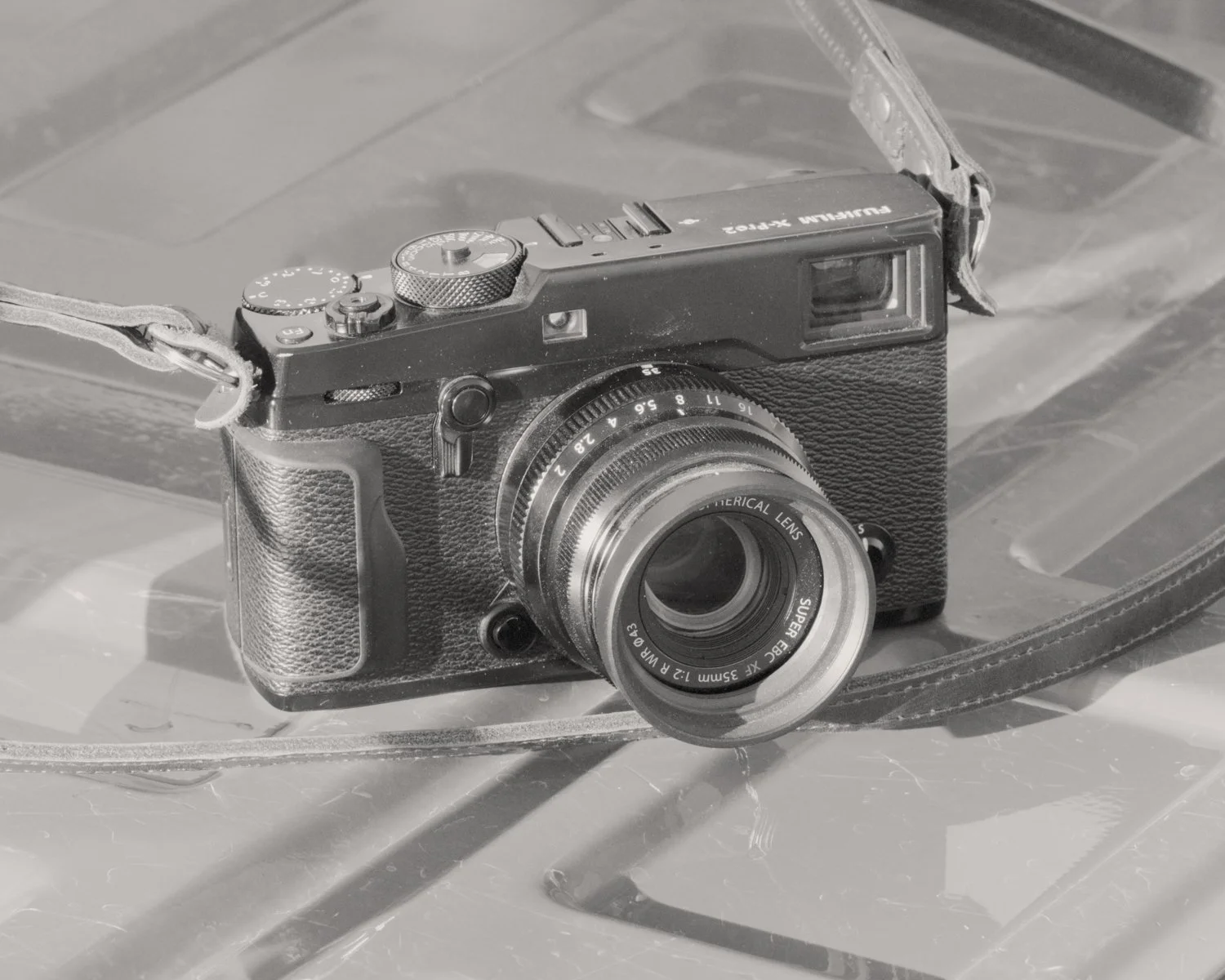
One Camera, One Lens
Photography starts before you even pick up a camera. When I'm shopping for cameras, photography is telling me that I want to take pictures. It is an impulse to frame what is sitting right in front of you. But the gear obsession is a distraction, and an ambient light meter may help your photography more than new gear. You slow down, measure the light falling on the pavement, and pay attention to what matters.
Virtual Movements
With enough resolution, we can crop in, move a frame around, and simulate a view camera’s movements in post — including rise, fall, and shift.
Makeshift Rangefinder
By most metrics, we’re lousy photographers, and that’s fine. 50mm might be the best focal length, and 35mm the best lens if we crop in a little.
5600ºK
If sunlight’s temperature sits between 5000ºK and 6500ºK, then 5600ºK is a good custom choice.
Taken Seriously
If a picture is good enough for a view camera, it’s potentially good enough for a series, seriously. I love getting lost under a focusing cloth.
Aspect Ratios
Focal lengths and aspect ratios correlate. A 50mm needs a narrower 4:5 to emphasize relationships between foregrounds and back grounds, and on the other side, a 28mm does better with a wider 3:2 because it emphasizes side-to-side relationships.
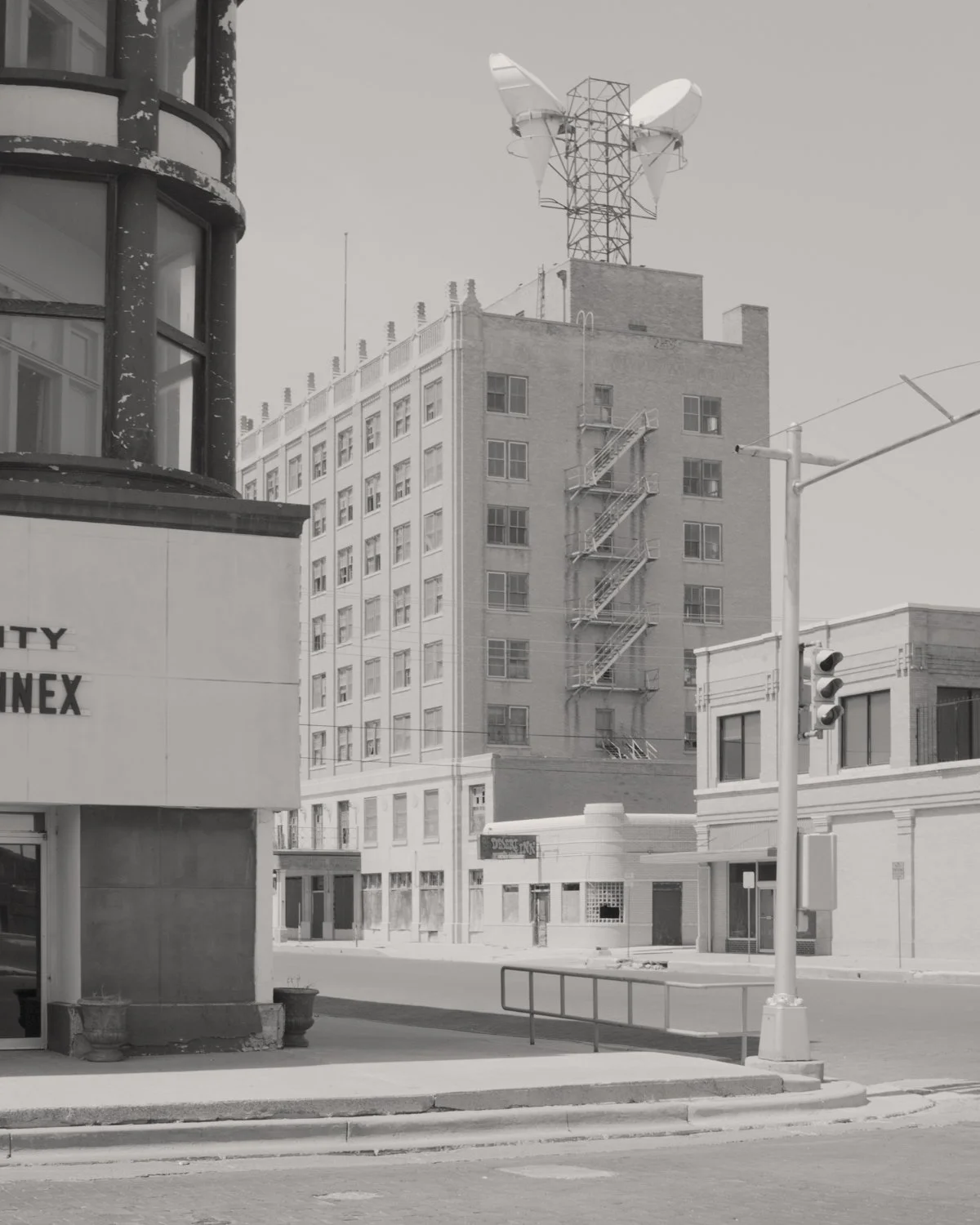
Layered
A 50mm lens is more front-to-back than side-to-side and compresses things together, perfect for layering foregrounds over backgrounds — more deadpan than a 35.
Complaining (a how to guide)
Live a great life. From wherever to whatever, I love taking pictures with my camera. It’s an obsession — a small footprint: prints, posts, and film resting inside a trusty binder.